
Health & Growth
Melasma: Causes, Treatment and Prevention
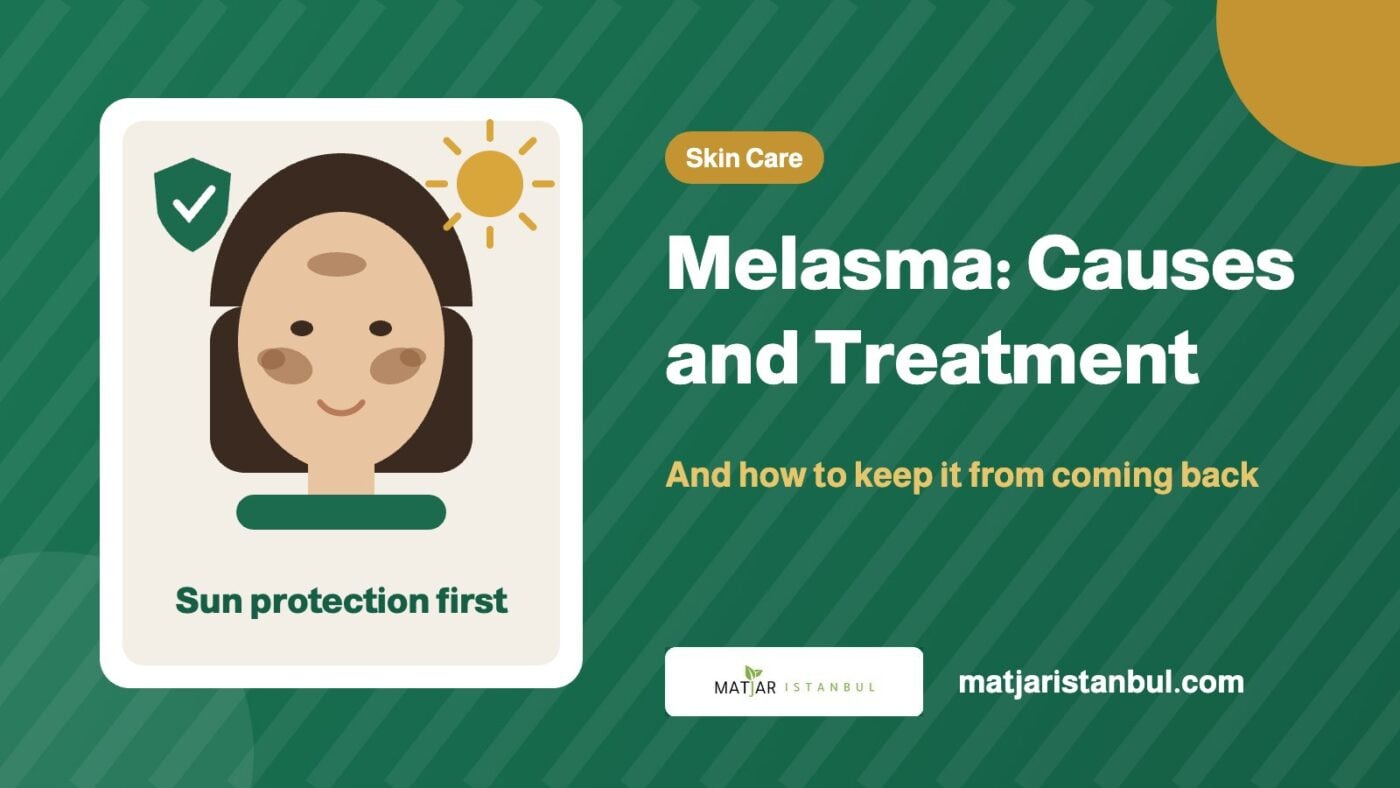
Melasma causes brown or grey-brown patches on the face, most often on the cheeks, forehead, upper lip and chin, usually in a symmetrical pattern on both sides. Its main triggers are UV rays and visible light, hormonal changes such as pregnancy and birth control pills, and genetics. It isn’t dangerous or contagious, but it can be frustrating and it tends to come back.
There is no permanent cure for melasma, but it can be controlled and lightened noticeably with the right plan: a broad-spectrum sunscreen every day, then topical creams chosen by a dermatologist, such as hydroquinone or azelaic acid, plus patience, because results take anywhere from 3 months to a year. Below we cover what causes melasma, why it’s so common in Saudi Arabia and Kuwait, the treatments dermatologists recommend, and how to use lightening creams safely.
What is melasma and how do you recognize it?
Melasma is a common pigmentation disorder in which pigment cells produce too much melanin in certain areas of the face. It appears as flat, non-raised patches with irregular borders, ranging from light brown to dark brown or bluish grey. The patches don’t itch or hurt, and they usually look darker in summer and fade slightly in winter.
Dermatologists describe three main patterns based on location:
- Centrofacial: forehead, nose, cheeks and upper lip, the most common pattern.
- Malar: cheeks and nose.
- Mandibular: along the jawline.
It rarely appears outside the face, on the neck, chest or forearms. Melasma is far more common in women, especially those with medium to darker skin tones, and it is often called the “mask of pregnancy” because it frequently appears during pregnancy.
What causes melasma?
There is no single cause. Several factors push pigment cells into overproduction:
- UV rays: the strongest trigger. Sunlight increases pigment, darkens existing patches and creates new ones.
- Visible light: it passes through car and window glass and is also given off by some screens, so melasma can worsen even if you spend most of your day indoors or driving.
- Hormones: pregnancy, birth control pills and hormone therapies are well-known triggers.
- Genetics: the risk is clearly higher if a family member has melasma.
- Skin irritation: some cosmetics, chemicals and harsh exfoliants inflame the skin and worsen pigmentation.
- Light-sensitizing medicines: such as some antibiotics and diuretics. Ask your doctor if you take a regular medication.
- Stress: may be linked to flare-ups in some people.
Why is melasma so common in Saudi Arabia and Kuwait?
The Gulf combines several risk factors: strong sun and a high UV index most of the year, long hours in the car behind glass, and medium to darker skin types that produce pigment more easily. On top of that, unregulated lightening creams of unknown origin can contain harsh ingredients that irritate the skin and make pigmentation worse over time. That’s why protection from both UV and visible light is the foundation of any plan.
How is melasma different from freckles and sun spots?
| Type | Appearance | Main cause |
|---|---|---|
| Melasma | Wide, symmetrical patches on cheeks, forehead and upper lip | Sun, visible light, hormones and genetics |
| Freckles | Small scattered dots that appear from childhood | Genetics, darkened by sun |
| Sun spots | Well-defined brown spots that appear with age | Years of cumulative sun exposure |
| Post-inflammatory pigmentation | Marks where acne or an injury used to be | Skin inflammation or injury |
How is melasma diagnosed?
A dermatologist can usually diagnose melasma by examining the face and neck. A Wood’s lamp or dermatoscope may be used to see how deep the pigment goes, because superficial melasma responds to creams faster than deeper pigment. In a few cases, if the patches look like another skin condition, a small biopsy may be taken. Getting the diagnosis right matters, because some spots need a completely different approach.
What are the treatment options for melasma?
The plan depends on how severe and deep the melasma is, your skin tone, and whether you are pregnant or breastfeeding. It usually follows these steps:
1. Sun protection comes first
This step is non-negotiable: without it, no cream’s results will last. The American Academy of Dermatology recommends a broad-spectrum sunscreen with SPF 30 or higher, ideally containing zinc oxide, titanium dioxide or iron oxide. Tinted sunscreens with iron oxide also help block visible light. Apply it every morning, even on cloudy days and indoors, reapply every two hours in the sun, and add a wide-brimmed hat and sunglasses.
2. Topical creams
- Hydroquinone: one of the most widely used ingredients for lightening melasma; it reduces melanin production. It is used at 2% to 4% for a limited period set by a doctor, and in many countries the 4% strength is prescription-only.
- Triple combination cream: hydroquinone, tretinoin and a mild corticosteroid, used only under medical supervision.
- Azelaic acid: a gentler option that is considered suitable during pregnancy and breastfeeding, after checking with your doctor.
- Supporting ingredients: alpha arbutin, kojic acid, vitamin C and niacinamide help even out skin tone and suit long-term or maintenance use.
3. Medical treatments and procedures
For stubborn cases, a doctor may prescribe tranexamic acid as tablets or a topical, after ruling out a history of blood clots. Chemical peels, lasers and microneedling are also available, but they need an experienced dermatologist, since the wrong procedure can irritate the skin and deepen pigmentation, and relapse afterwards is common.
Skincare for melasma-prone skin from Matjar Istanbul
After speaking with a dermatologist, these original Turkish options are available in our store:
- Expigment Cream 30 g: contains 4% hydroquinone and helps lighten dark areas and even out skin tone. Apply to the patches only, for the period your doctor or pharmacist advises.
- Bee Beauty Alpha Arbutin Serum 30 ml: a gentler option that supports a more even skin tone, ideal for maintenance.
- The Purest Solutions Sunscreen SPF 50+: high protection with a matte finish for oily skin, the foundation of any melasma routine.
How do you use melasma lightening creams safely?
Strong lightening creams work well when used correctly, but overuse can cause problems. Follow these rules:
- Talk to a doctor or pharmacist first, especially before using hydroquinone, and never exceed the amount and duration on the label or set by your doctor.
- Patch test on a small area behind the ear or on the arm for two days before applying to your face.
- Apply a thin layer to the patches only, in the evening on clean, dry skin, away from the eyes and lips.
- Don’t use hydroquinone continuously for long periods. It is usually used for a few months, then stopped or replaced with gentler ingredients, because very long use can rarely cause permanent darkening called ochronosis.
- Avoid hydroquinone and triple cream during pregnancy and breastfeeding, and ask your doctor about safe alternatives.
- Stop and see a doctor if you get strong redness, burning or persistent peeling.
- Avoid creams of unknown origin or with unclear ingredients, as they may contain strong steroids or harmful substances.
How long does melasma treatment take, and does it come back?
Melasma needs patience. Patches usually start lightening after 8 to 12 weeks of consistent use, and clear improvement can take 3 months to a year, longer for older or deeper melasma. It may fade on its own after giving birth or stopping birth control pills, and it often improves after menopause.
Relapse is common, because melasma is a chronic condition that can be controlled but not permanently cured. Unprotected sun exposure can bring patches back within days, so keep up daily sunscreen and gentle maintenance products even after the patches fade.
How can you prevent melasma?
- Wear sunscreen every day, all year, and don’t rely on SPF foundation alone.
- Avoid direct sun between 10 a.m. and 4 p.m. whenever possible.
- Wear a wide-brimmed hat and sunglasses, and consider UV-blocking film on car windows.
- Choose gentle cleansers and moisturizers, and avoid harsh scrubs and rubbing your face.
- If melasma appeared after starting birth control pills, discuss alternatives with your doctor.
- If you avoid the sun a lot, keep an eye on your vitamin D level, since sun protection can reduce how much your body makes.
Melasma FAQs
Does melasma go away permanently?
It can fade on its own once the trigger is gone, such as after pregnancy, but in most cases it is a chronic condition that can be lightened and controlled, with a chance of returning after sun exposure.
What is the best cream for melasma?
No single cream suits everyone. Hydroquinone and triple combination cream are among the most used options under a doctor’s supervision, while azelaic acid, alpha arbutin and vitamin C are gentler choices. Whatever you use, pair it with daily sunscreen.
Can men get melasma?
Yes, although it is less common. In men, sun and genetics are the main causes, and the approach is the same.
Can melasma be treated during pregnancy?
During pregnancy the focus is on mineral sunscreen and sun protection. Azelaic acid is considered a suitable option after checking with your doctor, while hydroquinone, triple cream and tranexamic acid are avoided.
Does laser remove melasma?
Laser can improve results in some cases when added to creams and sun protection, but it isn’t the first choice, it can worsen pigmentation if not done by a specialist, and relapse is common afterwards.
Order melasma skincare from Turkey with shipping to Saudi Arabia and Kuwait
Matjar Istanbul stocks original Turkish skincare for pigmentation-prone skin: Expigment cream, Bee Beauty Alpha Arbutin serum and The Purest Solutions SPF 50+ sunscreen. We ship to Saudi Arabia and Kuwait, with long expiry dates guaranteed. Browse every option in our Skin Care section.
Read next: Vitamin D Deficiency Symptoms: 12 Signs Not to Ignore and Vitamin D Benefits: Daily Dose and Best Types.
Disclaimer: this article is for general education and doesn’t replace a dermatologist’s advice. Lightening creams, especially those containing hydroquinone, should be used after consulting a doctor or pharmacist, on the patches only, without exceeding the amount and duration on the label, and not during pregnancy or breastfeeding unless your doctor approves. The products mentioned are skincare products and do not replace a medical diagnosis; results vary from person to person.